
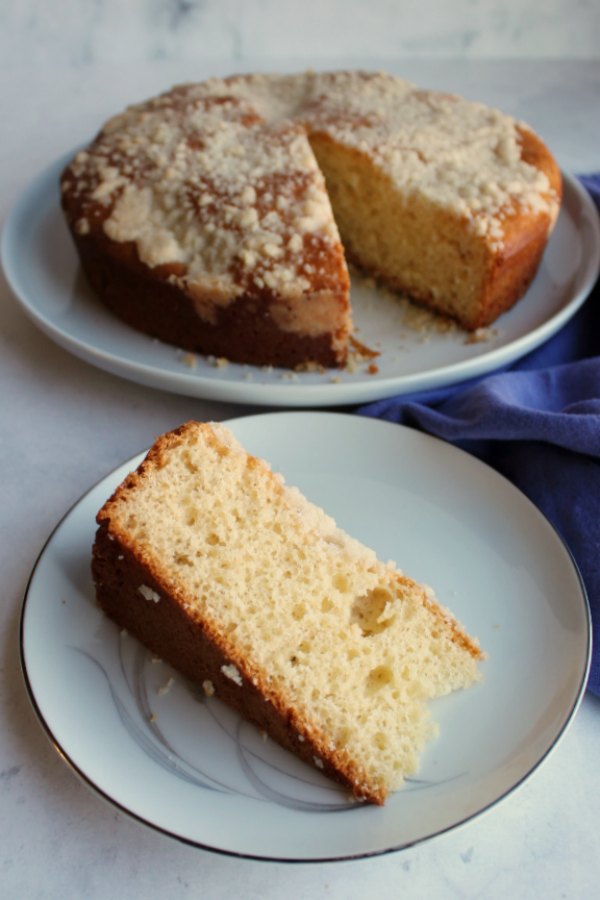
This sweet bread is topped with buttery crumb topping for a delicious treat. Bake it as a loaf or as a round for an extra special treat with your coffee or tea. It is an Easter time tradition, but is great all year long.
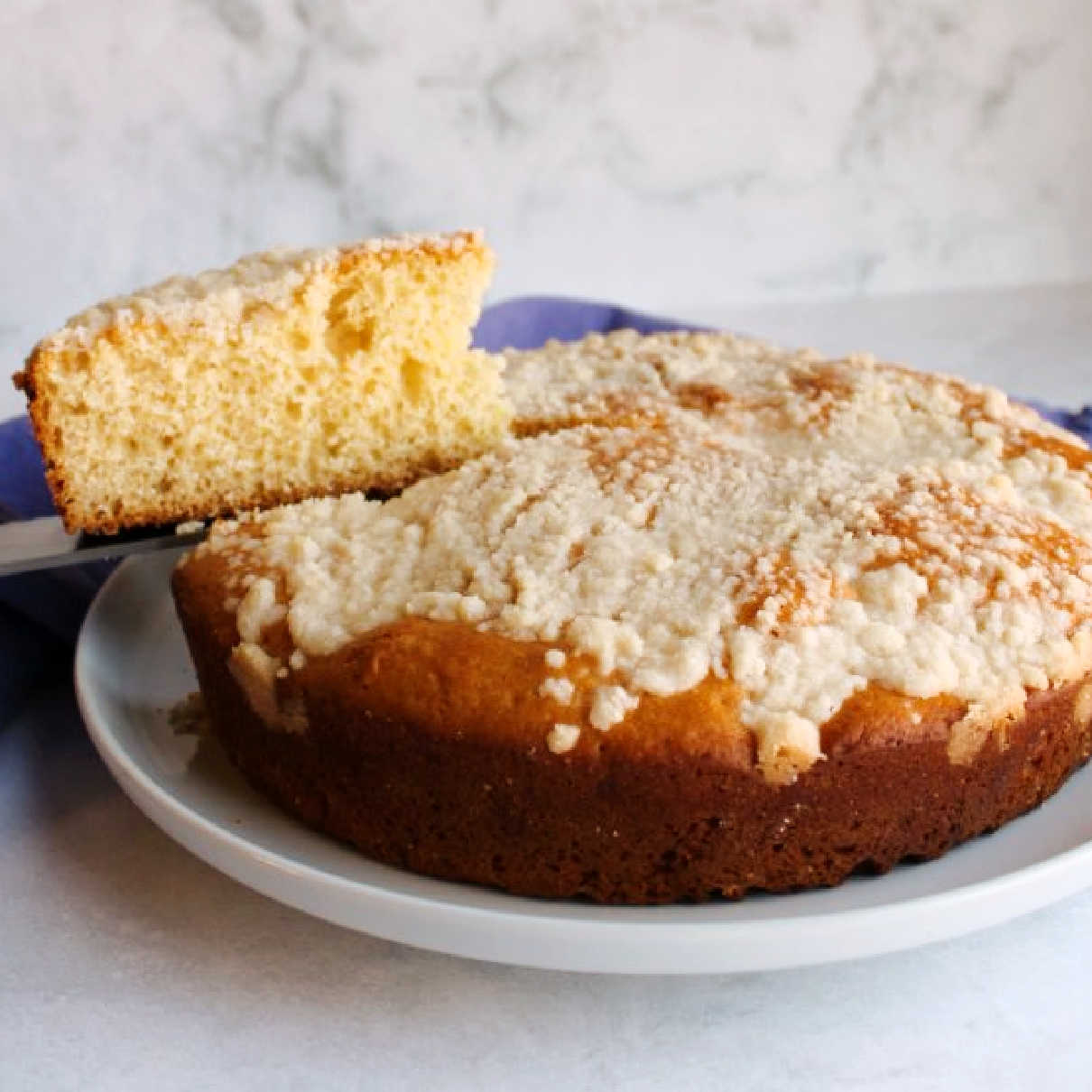
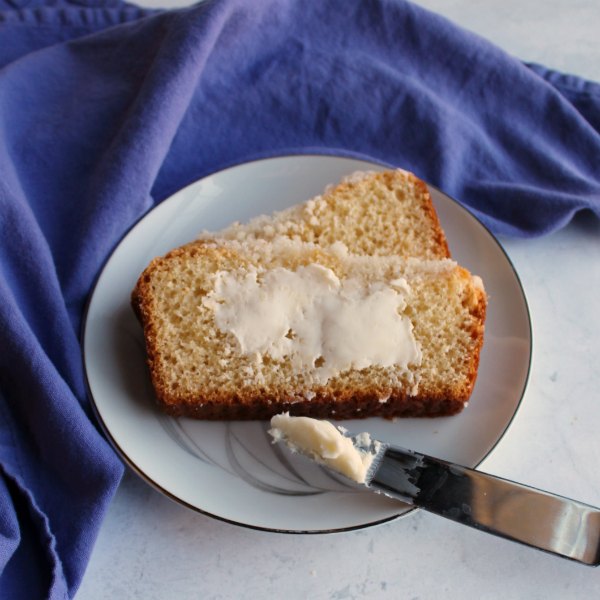
This sweet treat is part bread and part coffee cake. It is a perfect addition to your breakfast or brunch menu. It is fabulous on its own fresh, but with a smear of butter or jam it is great for several days.
It is an Easter tradition in many places, but there is no reason you can’t enjoy a slice any time. A batch makes two loaves (or cakes) so enjoy one now and freeze one for later!
With Easter right around the corner, I knew I wanted to do something fun and a little different. With this year’s Easter Open House being a brunch theme, I had the perfect venue to serve lots of coffee cake!
Nana’s family is Polish, so I thought it would be fun to try out another fun Polish recipe. The lemony babka from I made last year around Easter was so fun, I knew there had to be more delicious Polish recipes that would fit the bill.
There were quite a few fun versions of Polish placek out there. All started with a rich yeast dough, full of butter and eggs.
Then they are topped with a crumb topping called Kruszynki. Most were baked in loaf pans and they all looked delicious.
I found a recipe on a Polish parish’s website that was from a newspaper clipping dated March 17, 1966. This is Mrs. Mary Lipinski’s recipe of 124 Colt Street, city unknown.
It seemed like Mary might know a thing or two about placek, so I knew this would be the recipe I would go with.
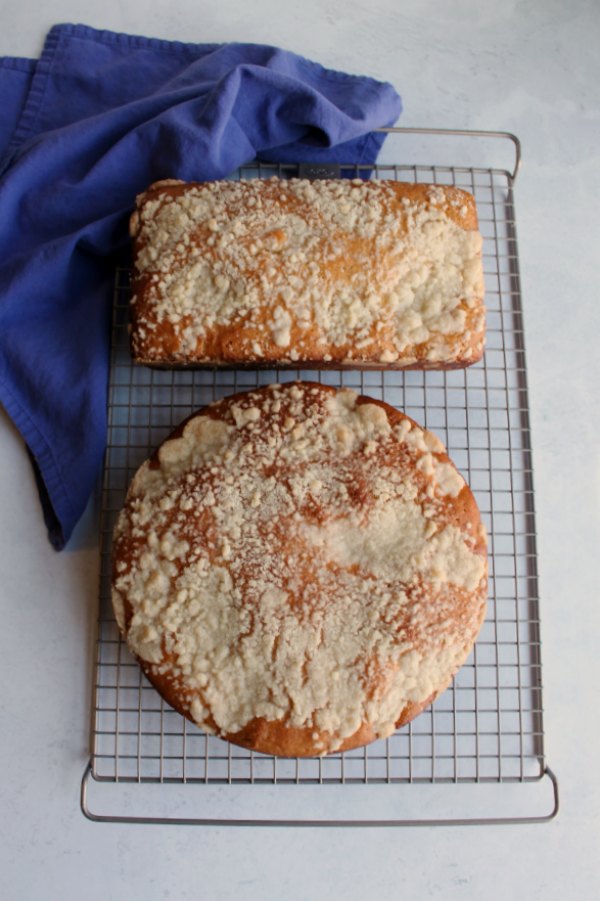
The first time I made it, I followed the recipe to a “T.” That is always a great place to start, especially when it comes to baking.
That was a really large recipe, meant to yield 4 loafs. Which is a lot of placek, even for my big family of eaters. So this time I decided to make some tweaks and shrink it down a bit.
Two loaves seemed like a more appropriate amount to make at a time. However, if you need 4, just hit the 2x button in the recipe card and it will do the math for you.
Placek History and Pronunciation
It seems like the word placek just means cake in Polish. It is pronounced “plah-sek.”
I am not sure how original this is to Poland itself, but it seems a lot of American cities with large Polish population have a history of placek. It is often served at Easter time.
Email Me The Link
I suppose that is why almost every recipe you find makes a TON. I suppose the grandmas doing the baking are expecting a crowd.
Luckily they do freeze well, so I guess if you are baking some you might as well bake a lot. Then you can have an easy treat later.
Most recipes include golden raisins in the dough. You can add them in while you are mixing it up.
I am not surprised as my Polish babka recipe also included raisins. My family is mixed on being raisin fans, so I opted to leave them out this time.
You can also add nuts to the crumb mixture. Walnuts seem to be a popular addition, but again I opted to leave them out this time.

Things to Know Before You Start
This bread essentially rises three times. There is the sponge, the proofing and the final rise.
So it does take a little time, but that equals flavor! If you want to spread it out, you can chill the dough after the proof.
Just cover the bowl with plastic wrap and put the proved dough in the refrigerator for up to three days. Let it come back to room temperature, then put it in your prepared baking pans.
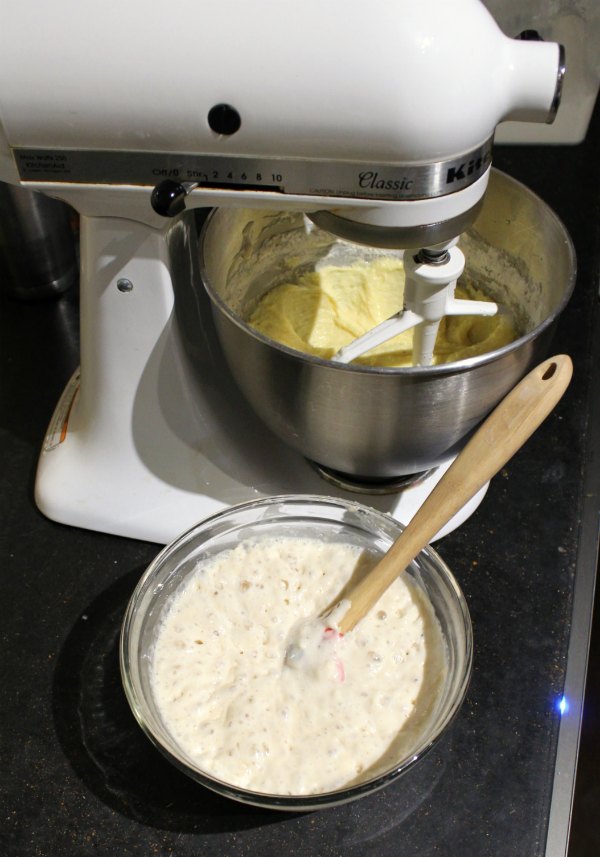
The dough is more of a thick batter. It will not come into a ball like regular bread dough. It should get kind of smooth and elastic as the gluten is worked, but it will remain sticky and loose.
You can mix in all of the flour by hand, but you will thank yourself if you use a mixer. It makes getting the gluten developed a lot easier!
Polish Placek
Ingredients
Sponge
- 1 cup milk
- 2½ teaspoons granulated sugar
- 2½ teaspoons active dry yeast 1 pkg
- 1 cup all-purpose flour
Dough
- ½ cup unsalted butter softened
- 1 cup granulated sugar
- 3 large eggs at room temperature
- ½ teaspoon salt
- dash nutmeg
- zest of lemon or orange or 1/2 teaspoon lemon extract
- 2½ cups all-purpose flour
Crumb Topping
- 3 Tablespoons unsalted butter softened
- ⅓ cup granulated sugar
- ½ cup all-purpose flour
Instructions
Sponge
- Warm the 1 cup milk to about 105°F. It should be warm to the touch, but not so warm you couldn't keep your finger it in.
- Pour into a large bowl. Stir in the 2½ teaspoons granulated sugar and 2½ teaspoons active dry yeast, let sit for about 15 minutes. It should by foamy and active.
- Stir in the 1 cup all-purpose flour and let sit until about doubled in size, about 45 minutes.
- During this time pull the ½ cup unsalted butter and 3 large eggs out of the refrigerator for the dough if you haven't already.
Dough
- Cream together the ½ cup unsalted butter and 1 cup granulated sugar until it's light and fluffy.
- Add the 3 large eggs, one at a time, mixing well between each addition.
- Stir in the ½ teaspoon salt, dash nutmeg and zest of lemon or orange or extract.
- Add 1 cup flour, beating until combined. Add sponge and remaining 1½ cups flour. Beat for 5 minutes on medium speed. The batter should be smooth and elastic, but still sticky. It is more of a stiff batter than a ball of dough.
- Place in a greased bowl and cover with plastic wrap or a damp towel. Allow to rise until doubled, about 1½ – 2 hours.
- The proofed dough can be left covered and refrigerated for up the 3 days at this point. (Just allow it to come to room temperature again before proceeding.)
Crumb Topping and Baking
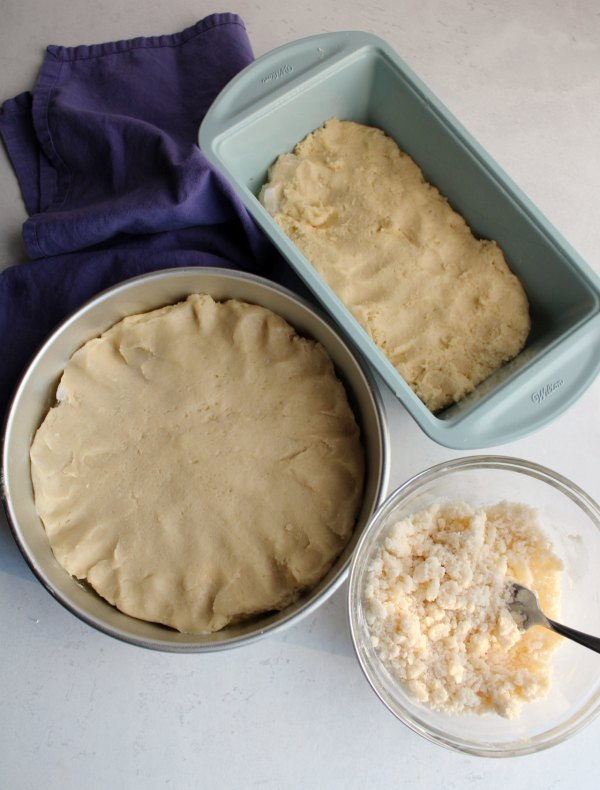
- Grease 2 9×5-inch loaf pans, 2 9-inch round cake pans, or one of each. Punch down the proofed dough and put half in each pan. Using damp or greased fingers, press the dough to the edges of the pan.
- Cut together the 3 Tablespoons unsalted butter, ⅓ cup granulated sugar, and ½ cup all-purpose flour until the mixture is crumbly and well mixed. Sprinkle half over each part of the dough. Press lightly to affix to the dough.
- Cover and let rise until they are risen almost to the top of the pans, about 1½ hours.
- Preheat oven to 325°F. Bake 35-40 minutes. They should be golden on top.
- Cool in the pans for 10 minutes, then remove from pan and place on wire rack until completely cool.
- Store in airtight container at room temperature or wrap and freeze for up to 3 months.
- Serve slightly warmed or at room temperature with a spread of butter or preserves.
Email Me The Link
Did you try this recipe?
Don’t forget to leave a rating below and make sure to follow on Pinterest and Instagram for more!
More Popular Coffee Cake Recipes


Get social!
Recipes in your inbox

This is my last name, so I gotta try it! To make it in a bread machine, how do I handle the topping?
I haven’t used a bread machine, so I am not sure. Is there a way to put it on right before it bakes?
I was so excited to try this placek but the dough was runny, I added more flour but it didn’t work for me 😢
It was runny even after the full dough was made? I am not sure what could have caused that, but I am sorry it happened.
Great recipe; just like my family’s. It would great if you also gave metric measurements. Maybe you could add the conversion button to the recipes.
Thanks
I will work on getting the metric measurements added, thank you for the request.
I’m excited to try this because my Grandma made a bread that looked very much like your pictures. She made it pretty often and it was wonderful
I hope this tastes just like hers!
The street name is “Coit Street”, and the city is Buffalo.
This is a “famous” Polish recipe, known throughout Western New York, with Mrs Lipinski well-appreciated for her contribution.
I baked this using King Arthur Flour Co Gluten Free Bread flour for the sponge and cake, and their Gluten free Measure for Measure for the crumb. It turned out Beautifully! Soft, light, fluffy and absolutely delicious!
I am so glad you liked it!
I had some issues with this recipe. My sponge proofed fine followed measurements as followed even though my feeling was to add more flours. My dough looked very wet and sticky. I saw what you wrote that it should be like that but again, my gut was to add a bit more flour as mentioned. My dough didn’t rise as good or looked like yours in the pan.
What are you beating on like 2-3 level or 4-6 on standing mixer? Beat well over 5 minutes thinking it just wasn’t looking the way it should.
Being from Buffalo, Ny I’m no stranger to the Placek so I’m confused by flour measurements.
Thanks
This dough doesn’t come together like a typical bread dough. So it is a bit sticky, even after you have worked the gluten. I usually put my mixer on about a 5 or 6 and let it knead it together.
There should have been the 1 cup of flour in the sponge and then 2 1/2 more cups in the dough, plus another 1/2 cup in the crumbs, so 4 cups altogether. Sometimes you may need a little more or less because of humidity etc., but it shouldn’t need a whole lot more than that.
I am sorry it didn’t rise for you. I know that is disappointing. I hope you’ll give it another go!
Can use sb out the rapid rise yeast? If so, same amount? My jar of active I just night isn’t proofing well. I have the rapid at home as well. Thanks
Yes, you can sub it 1:1. I hope you enjoy it!
We always added fresh squeezed orange juice of 6 large oranges- considering the recipe starts with “get 25 pounds of flour, a dozen eggs, 1/2 gallon fresh milk (eg, not homogenised), and 2 lbs of butter… 6 oranges isn’t as much as it sounds like.
Although we made the kind with golden raisins (soaked in brown-sugar dissolved in hot water over night), we also did a roulade with prunes and one with apricots.
Also, the cruszynki was only put on just before the final proof, and we were careful not to overload the middle.
My favourite was always the prune. This was made on Good Friday, because with a zillion loaves it took all day and the general idea is if you are going to suffer baking it might as well be Good Friday … but something about cruszynki .. my great grandmother’s recipe directs you to make two large wooden bowlfuls – one goes on the table, with a dish towel over it and one goes on the icebox, also with a dish towel over it.
It never again mentions the bowl on the table. I asked why- and was told to make it and see. Everyone who goes past the bowl on the table nicks a little bit and in time the bowl was empty. Everyone stayed clear of the one on the icebox… my beloved little Babci, instead of getting angry at people stealing the crumble she just made enough so people could happily steal the yummy bits. And for me, that’s at the heart of Polish food- it’s got love inside, augmented and made so much sweeter by the joy of the person making the traditional food- sharing age old traditions with those she (he) loves- even if it took every bread pan she owned, plus spending all day in a sweaty kitchen with the acrid aroma of freshly ground horseradish and the garlicy steam from the boiling biala kielbasa.
Please don’t tell anyone about the oranges. It’s her secret ingredient. 😉 😉 😉 Shhh.
I love everything about this so much! I’ll bet the oranges are a great addition, but I won’t tell anyone!! 😉
I made this recipe last Easter and it reminded us if the placzek my grandmother made. I will be making it again this year. Thank you for sharing it – it brought back many wonderful memories.
That makes me so happy, thank you!